The overview
The mouth–body connection, honestly explained
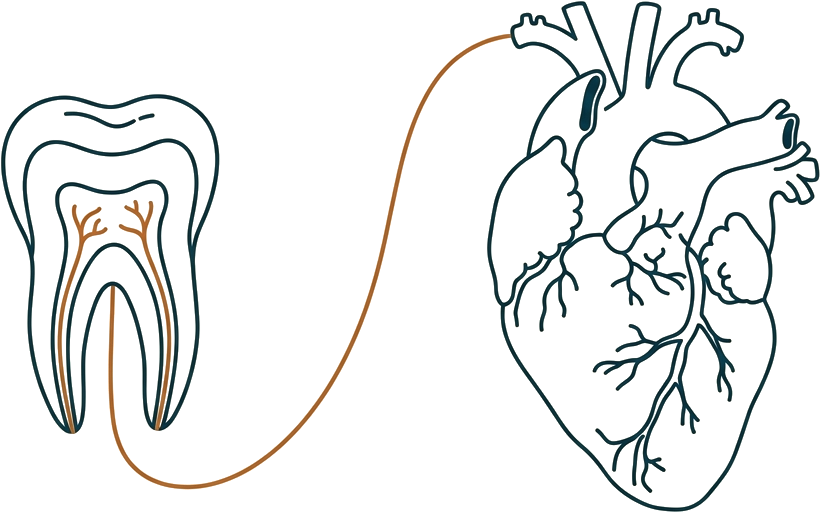
Inflamed gums are an open doorway: bacteria and inflammation from the mouth can reach the bloodstream, which is why researchers keep finding links between gum disease and conditions elsewhere in the body. This overview maps what's association, what's mechanism, and what's still unknown.
AHA · CDC · NIDCR/NIH
Heart health
Gum disease and your heart: what the AHA actually says
The American Heart Association reports that gum disease is associated with cardiovascular disease: bacteria from inflamed gums can enter the bloodstream and drive chronic inflammation. It's an association, not a proven cause, and we explain why that distinction matters.
AHA scientific statement
Diabetes
Gum disease and diabetes: a two-way street
The CDC says gum disease can make diabetes harder to manage, and that treating gum disease may help lower blood sugar over time. The evidence runs in both directions, and the honest version is conditional, not a promise.
CDC Oral Health & Diabetes
Pregnancy
Oral health during pregnancy
Hormonal changes during pregnancy can leave gums more prone to inflammation and bleeding, which is why professional guidance treats dental care as a normal, safe part of prenatal care. What's well established, what's still being studied, and what expecting parents can actually do.
Professional guidance · qualitative
Aging
Oral health as you age
By the CDC's own measurement, about 60% of adults 65 and older have gum disease, and keeping natural teeth matters for eating, speaking, and quality of life. What changes with age, and why daily habits count more, not less.
CDC NHANES · NIDCR
The cost evidence
Treating gum disease is linked to lower medical costs
A peer-reviewed study of over 330,000 insured members found that professional treatment for gum disease was associated with about 40% lower annual medical costs for members with diabetes. It's an association from claims data (about periodontal treatment, not home flossing), and we frame it exactly that way.
Jeffcoat · Am J Prev Med 2014
The insurer view
Why insurers built whole programs around gums
Cigna has run an Oral Health Integration Program since 2006, Aetna automatically enrolls members with diabetes or heart disease into dental-medical integration, and United Concordia built UCWellness around treating gum disease. The programs are real; the outcome figures come from each carrier's own analysis, and we label them that way.
Carrier program documentation